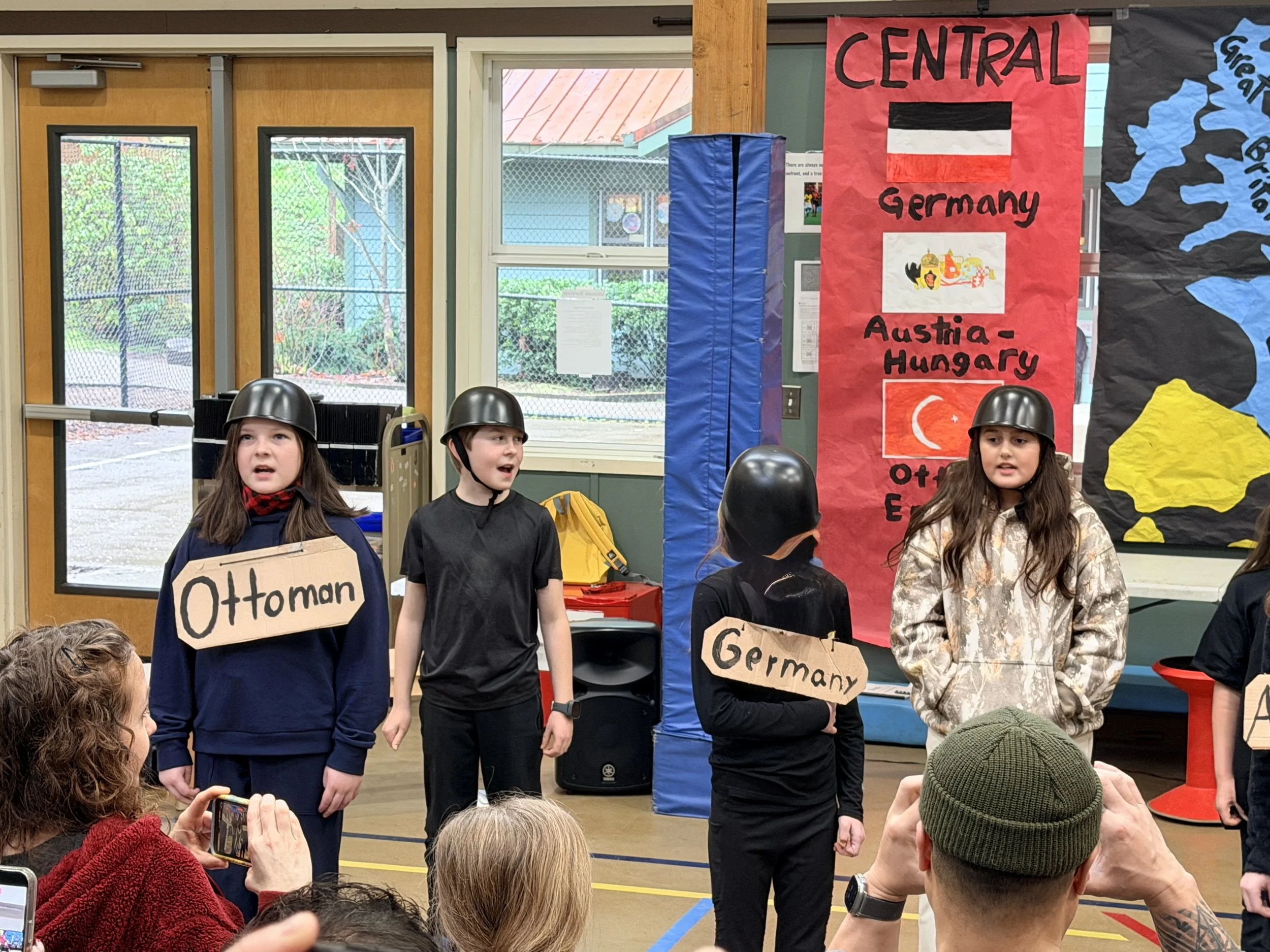
Ravens Bring WWI to the Stage
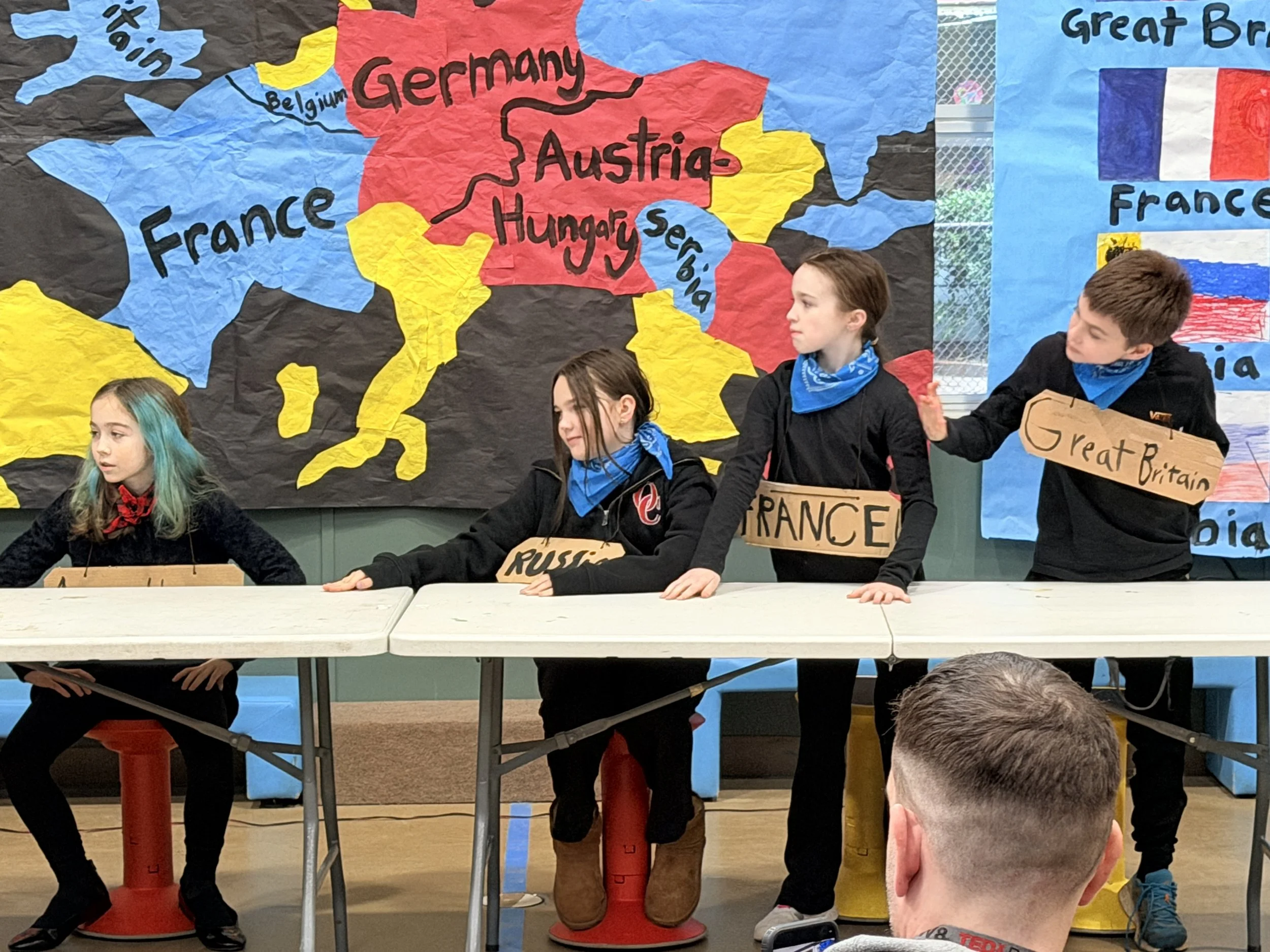
This month, Marylhurst’s fourth and fifth graders in both Ravens classes transformed their World War I studies into a powerful original musical performance, one that blended history, storytelling, music, art, and deep reflection. More than a play, the production served as the living text for the class’s entire WWI unit, allowing students to explore complex ideas through inquiry, creativity, and collaboration.
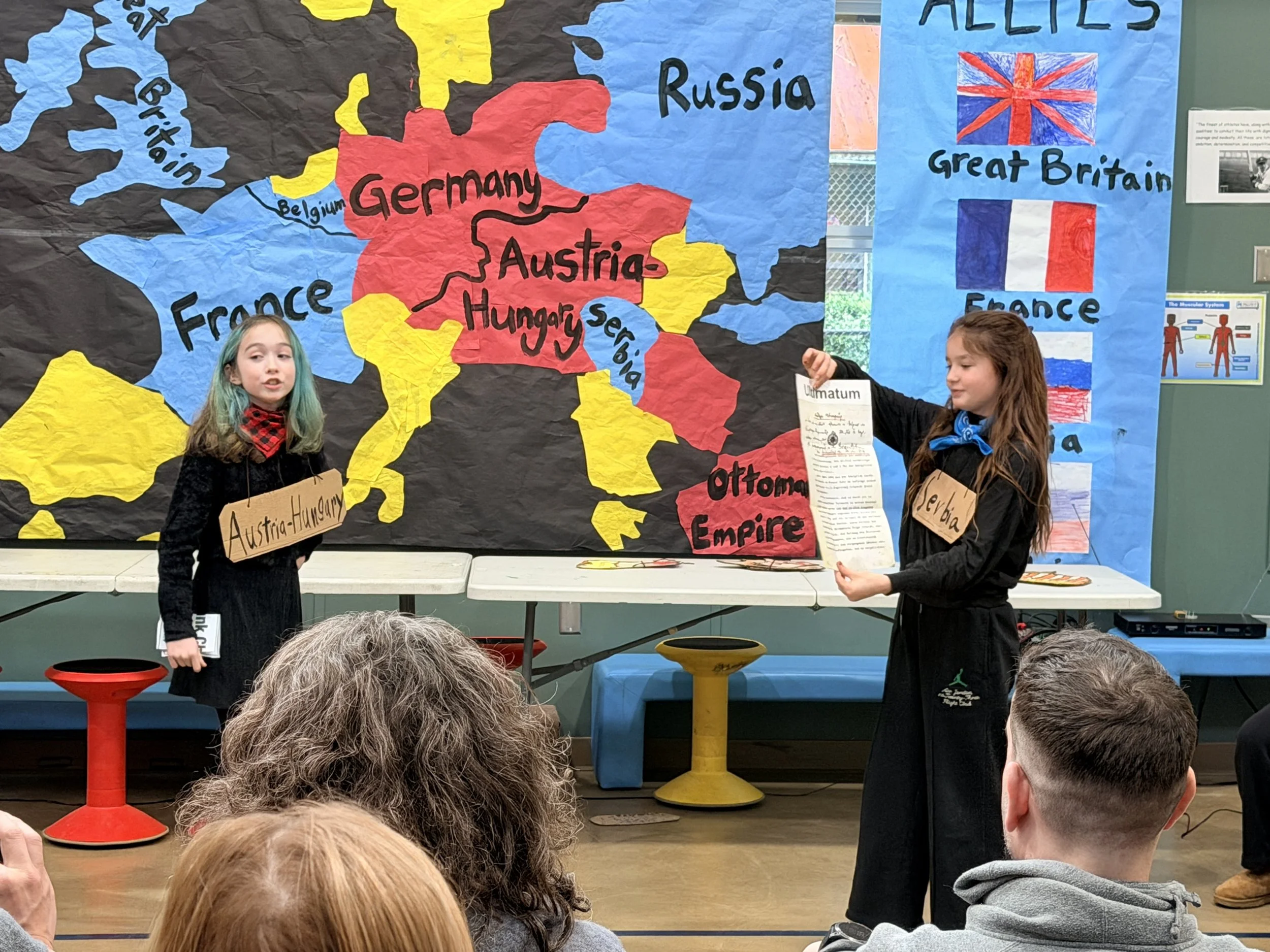
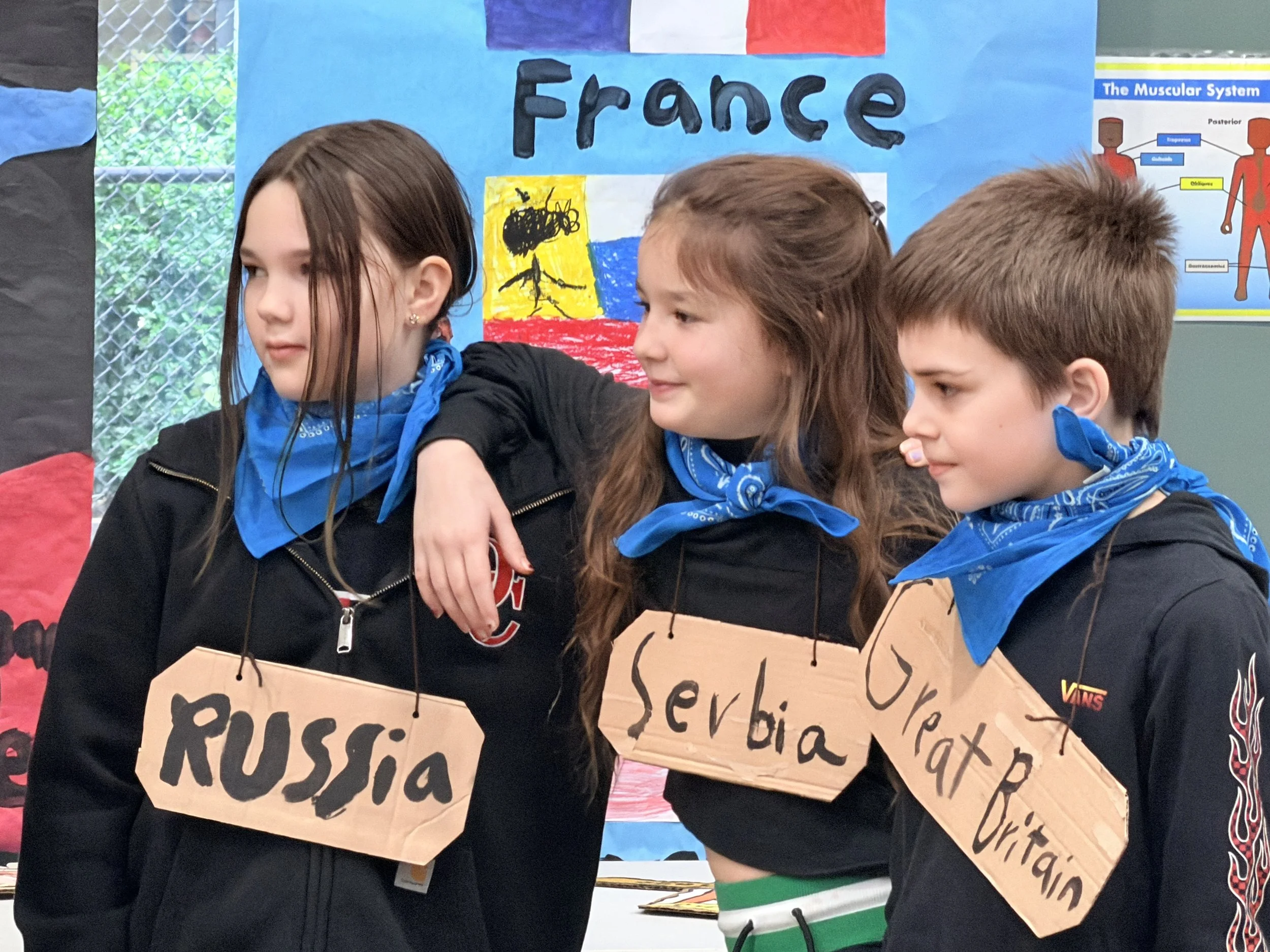
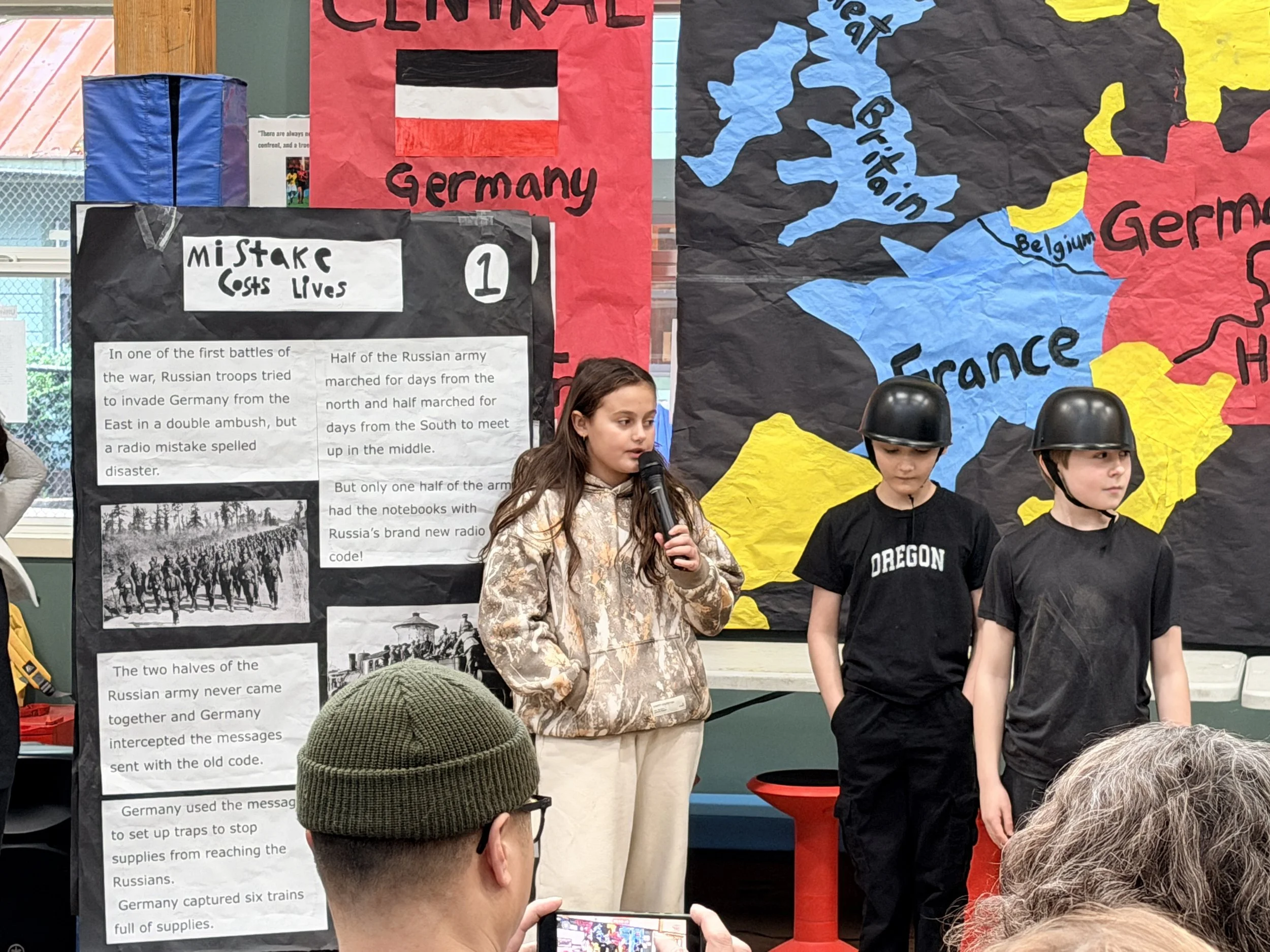
The play was created and adapted by Victoria, who began with a skit about the causes of WWI staged as a dinner party and expanded it into a full production that traced the war’s origins, major battles, the United States’ involvement, the Treaty of Versailles, and the long path toward peace. Thoughtfully designed to include a wide variety of roles, narrators, actors, singers, presenters, and leaders, the play ensured every student could take on a meaningful challenge that fit their strengths.
Rather than simply memorizing lines, students turned their scripts into scrapbooks over the course of a month. Each rehearsal began with discussion and reflection, while the students glued in images connected to the historical events they were portraying. Students also created their own props and backdrops, bringing both artistry and ownership into the process.
Music played a central role in making history come alive. Victoria wrote an original rap battle called The Glory to explore competing national pride, introducing students to rap as a form of spoken poetry. The class also studied historic songs from the 1910s, including I Didn’t Raise My Boy to Be a Soldier, one of the earliest anti-war songs tied to the pacifism movement, and Our Country’s in It Now, which illustrated how music and propaganda rallied American support once the U.S. entered the war.
The main musical number, The Price of a Mile by the Swedish band Sabaton, captured the horror and emotional weight of war in a way that was serious yet age-appropriate. With the help of Liam, who arranged and taught the songs, music became a unifying force that made the learning memorable and joyful.
Academically, the play connected WWI to the class’s literature study of The Lion, the Witch, and the Wardrobe, where students examined how stories often simplify conflicts into “good versus evil.” Through history, they discovered that real wars are far more complex.
Students explored how greed and nationalism fueled conflict using the MAIN acronym (Militarism, Alliances, Imperialism, and Nationalism) to analyze the causes of WWI. They studied empires and imperialism by mapping colonial territories and visualizing how alliances turned regional tensions into a global war. They reflected on sacrifice, both in literature and in the real lives of soldiers, and examined propaganda through posters and song lyrics to understand how emotions like pride, fear, and shame were used to influence public opinion.
They also challenged common myths about why the United States entered the war, learning that economic interests and trade played a major role. Finally, they explored peace movements and how women’s rights activism and pacifism developed together, discovering that peace itself requires courage and effort.
After the performance, students reflected on their hard work and celebrated one another’s growth:
“The people in the rap battle were really good.” – Lyra
“Oriah did a great job sounding like a newscaster. All the newscasters projected their voice.” – Lyra & Robbie
“Everyone did a really good job in ‘Our Country’s in it Now.’” – Olive
“Ellie was an amazing waiter.” – Cat
“Denali was really good at expressing his voice.” – Archer
“Nice job to the soldiers. They followed a lot of cues and acted a lot.” – Oriah
“Great job Riley and Archer on acting.” – Ellie
The performance was the culmination of weeks of learning and hard work. It’s a beautiful example of Marylhurst’s inquiry-based, experiential approach in action. By stepping into history, students didn’t just learn about World War I; they understood it, questioned it, and brought it to life together.
This production was more than a culminating project; it was a lived expression of the Habits of Mind & Body.. Students practiced curiosity as they questioned simplified narratives of “good versus evil.” They demonstrated empathy while grappling with sacrifice, propaganda, and the human cost of war. They showed resilience through weeks of rehearsal and revision. They embodied collaboration and courage on stage, supporting one another in song, speech, and storytelling. Through this experience, the Ravens transformed knowledge into understanding and understanding into growth.