Deepening Connections: Pattern, Scale, and the Movement of Ideas in Middle School
At The Marylhurst School, powerful learning happens when students are invited to think across disciplines, follow their curiosity, and make meaning through sustained, hands-on exploration. In middle school, this approach allows students to engage deeply with big ideas, returning to them through multiple lenses, materials, and modes of thinking.
From Geometric Tessellations to Textile Design
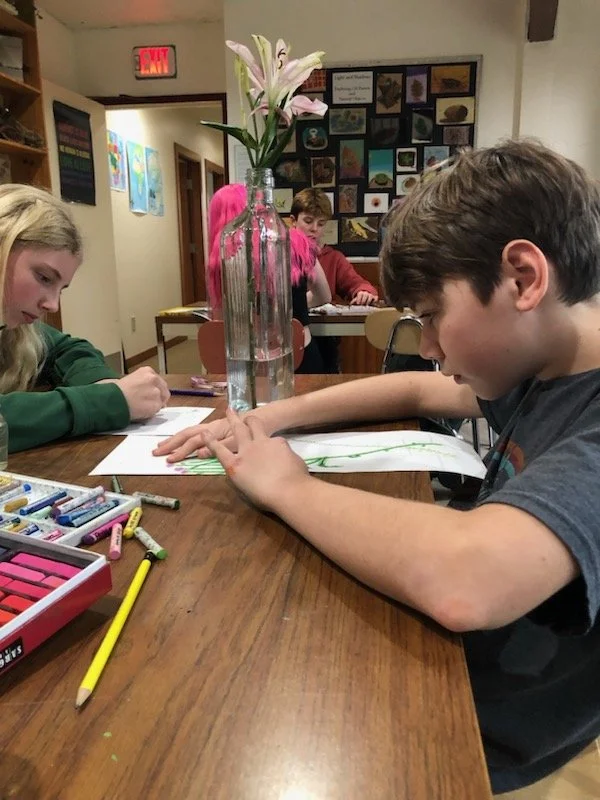
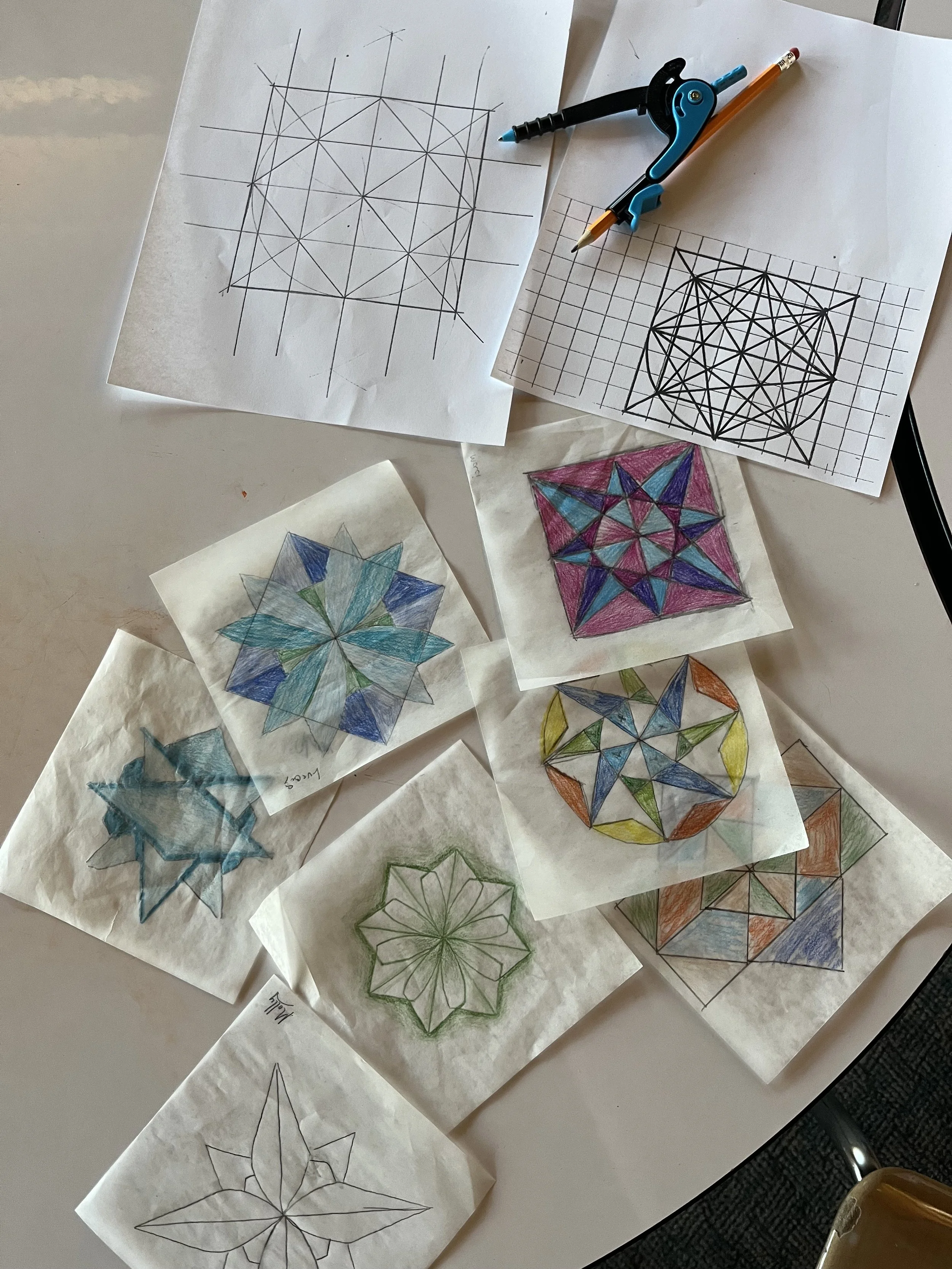
One area of exploration in math this term found students exploring geometric concepts such as translation, rotation, and reflection through the study of tessellations. Drawing inspiration from Islamic art, students examined how repeated geometric transformations create complex, balanced designs. These mathematical explorations have extended into Design Studio, where students are translating their tessellation designs into carved linoleum blocks. Using these blocks, they will print patterns on fabric, creating tapestries that embody both mathematical precision and artistic expression.
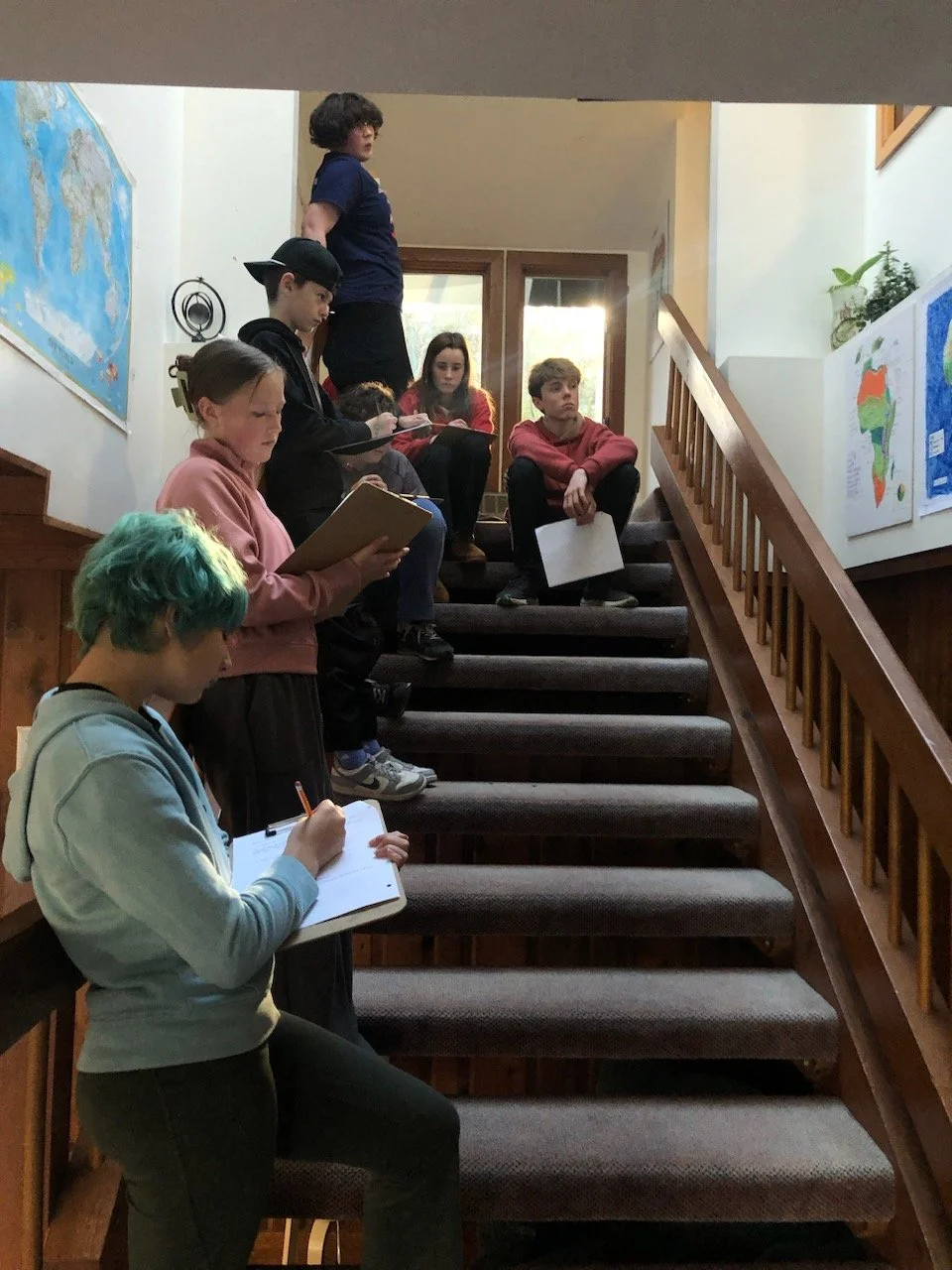
This work also connects to our study of Africa, particularly North Africa, and the role of trade routes in the movement of ideas. Students are discovering that mathematical and artistic concepts travel alongside goods, carried across regions through human exchange, adaptation, and innovation.
Thinking in Powers of Ten: From the Microscopic to the Cosmic
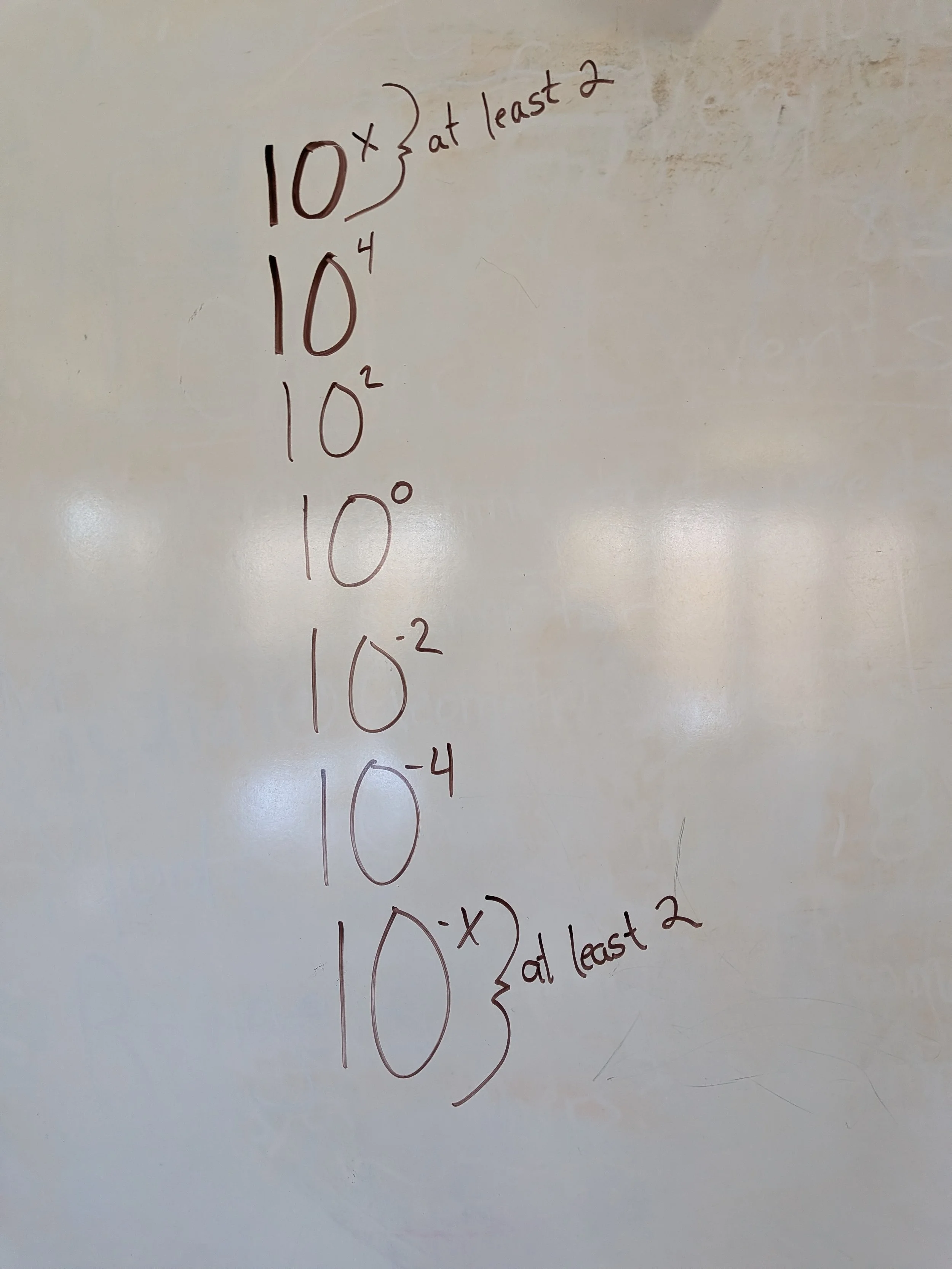
In Earth Science, students have begun an exploration of scale through the power of ten, inspired by the film by Ray and Charles Eames. This work introduces students to the relative sizes and distances of the Earth, moon, and sun, while also building habits of mind that allow them to move flexibly between vastly different scales.
Students are currently grounding these abstract ideas in concrete examples: imagining a single grain of sand from the Sahara, considering the volume of one drop of rain in Equatorial Guinea, or examining the East African Rift Valley across powers of ten, looking into the deep past and projecting into the geological future shaped by tectonic movement.
Eventually, students will demonstrate their understanding through the creation of a Museum of the Very Big and the Very Small, inspired by the Mindset Mathematics work. Using found materials, students will design three-dimensional models that represent scale, proportion, and scientific thinking, transforming numerical ideas into physical form and inviting others to engage with scale through curiosity and wonder.
Learning That Holds Together
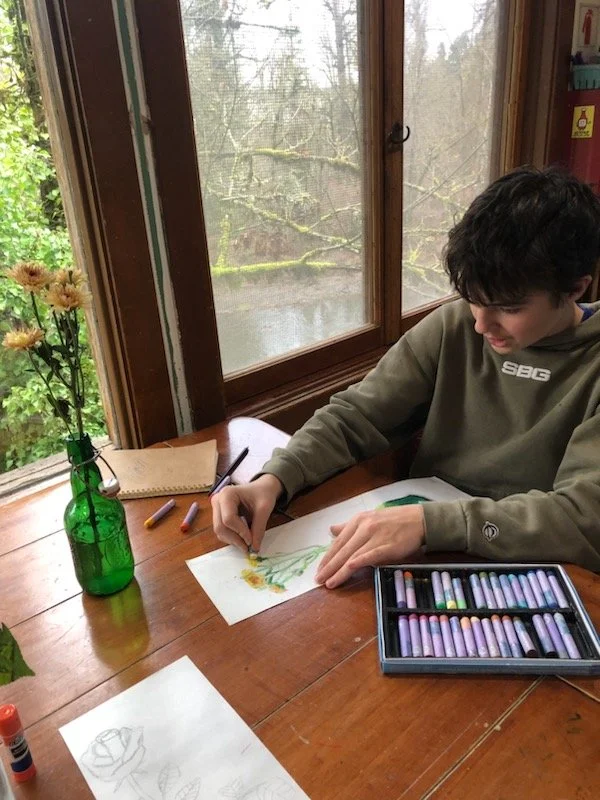
Across these experiences, students are asked to move between abstraction and making, between cultural context and scientific inquiry. Math becomes visible through pattern and print, science becomes tangible through model-building, and history provides the connective tissue that shows how ideas move, change, and endure.
This kind of cross-disciplinary work reflects the pedagogical depth of the middle school program at The Marylhurst School, where understanding is not measured by isolated answers, but by students’ ability to synthesize, create, and think expansively about the world.