Meet Gobblesnood! A Special Guest at Harvest Fest
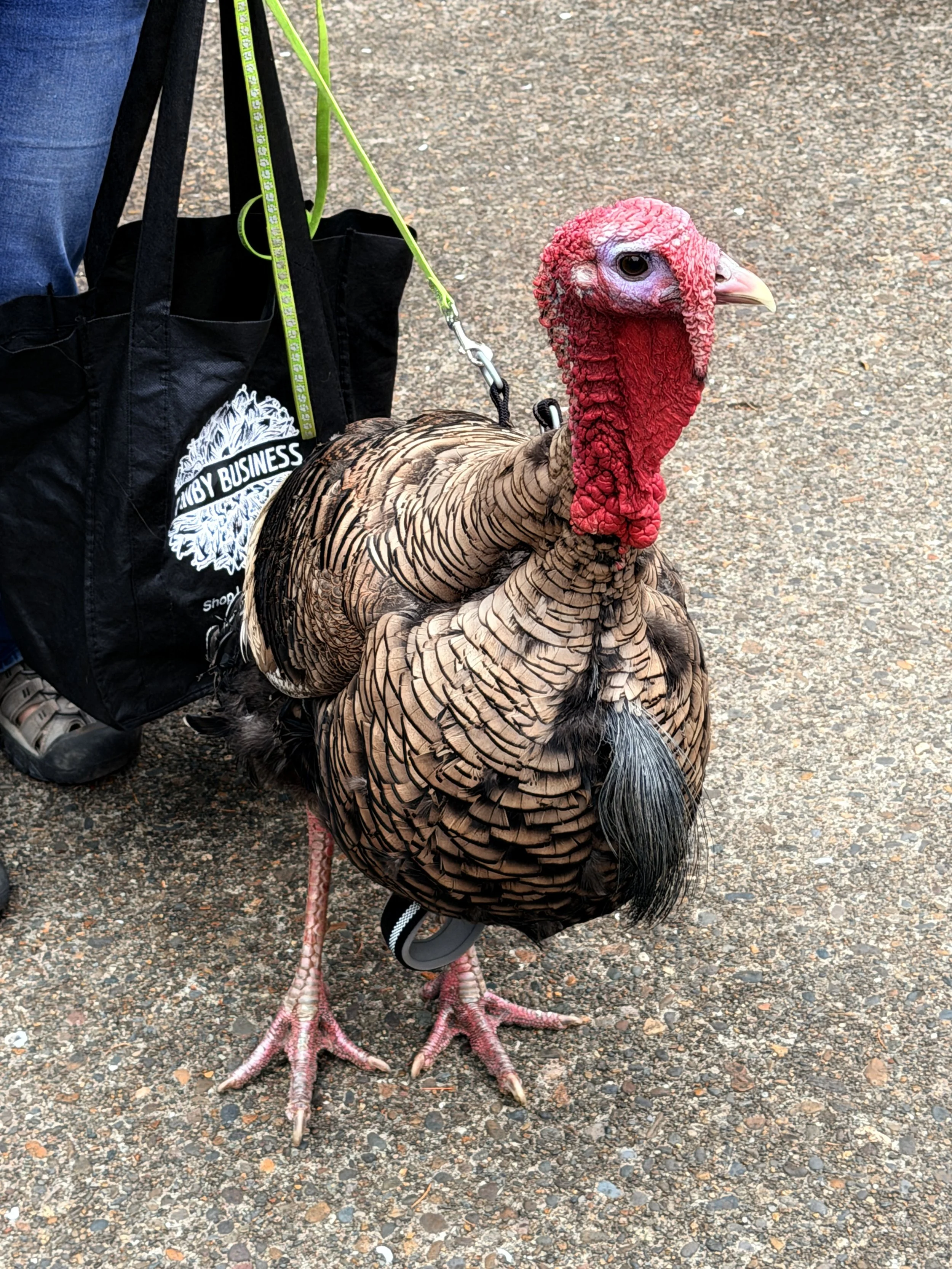
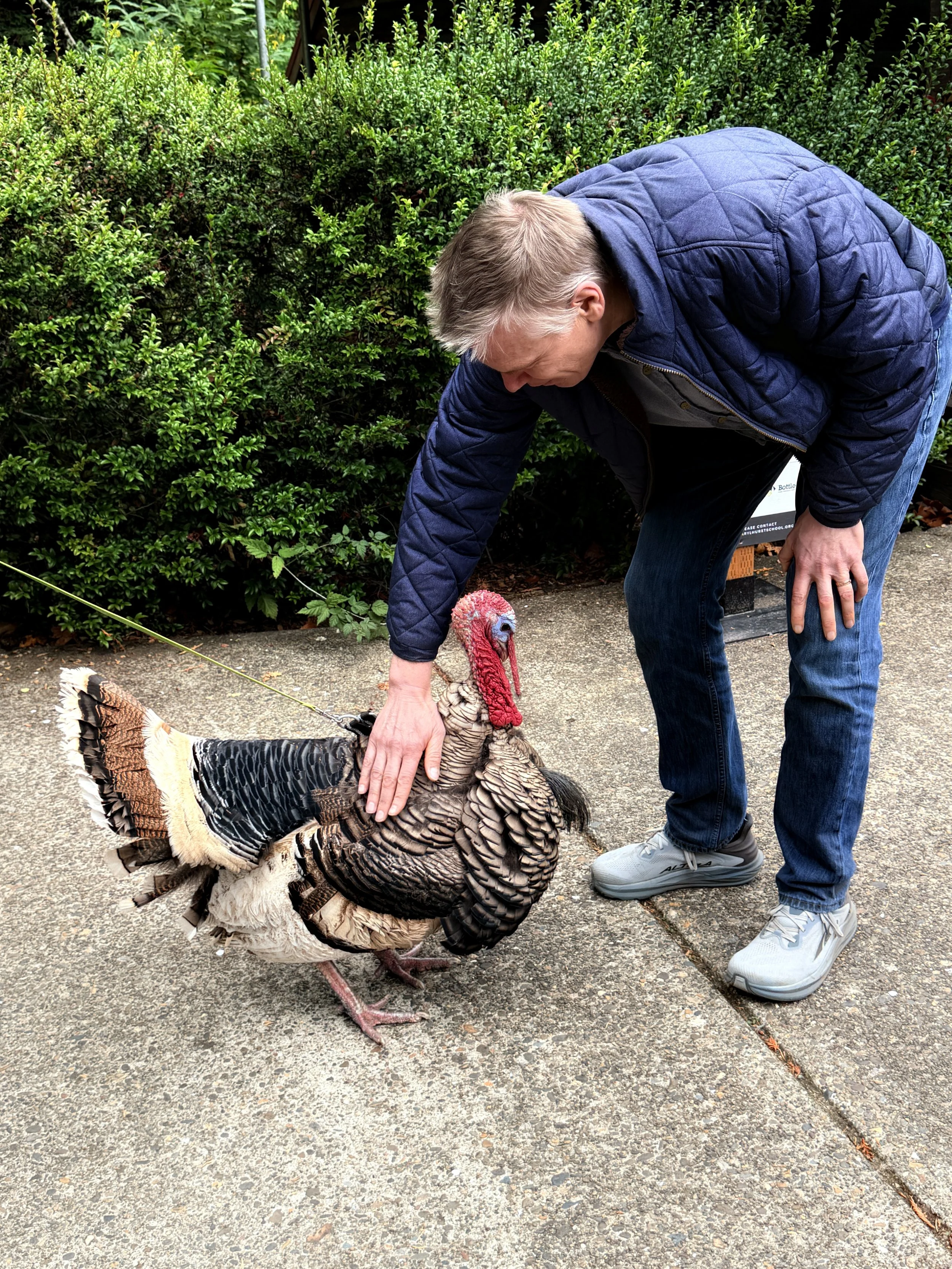
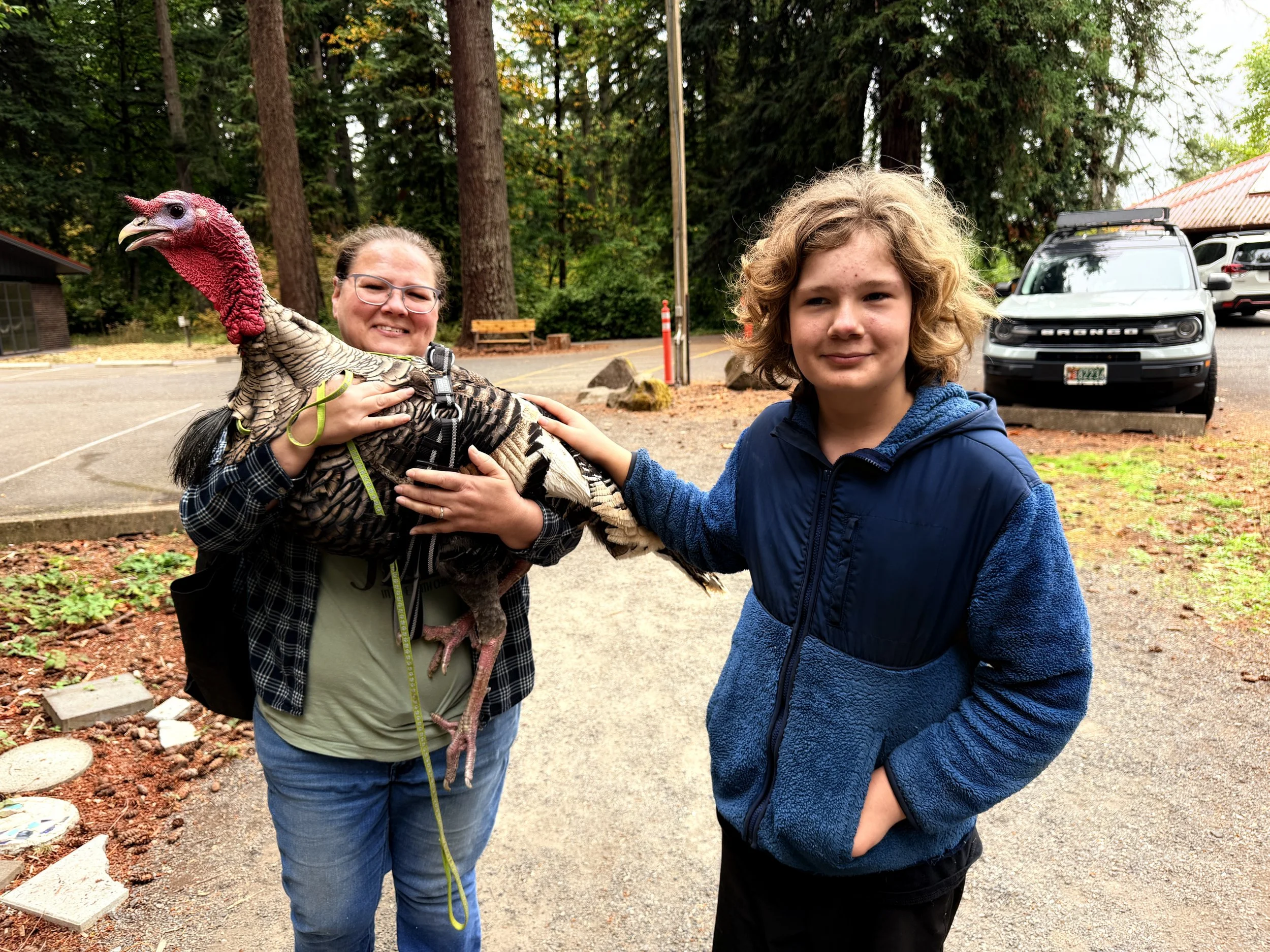
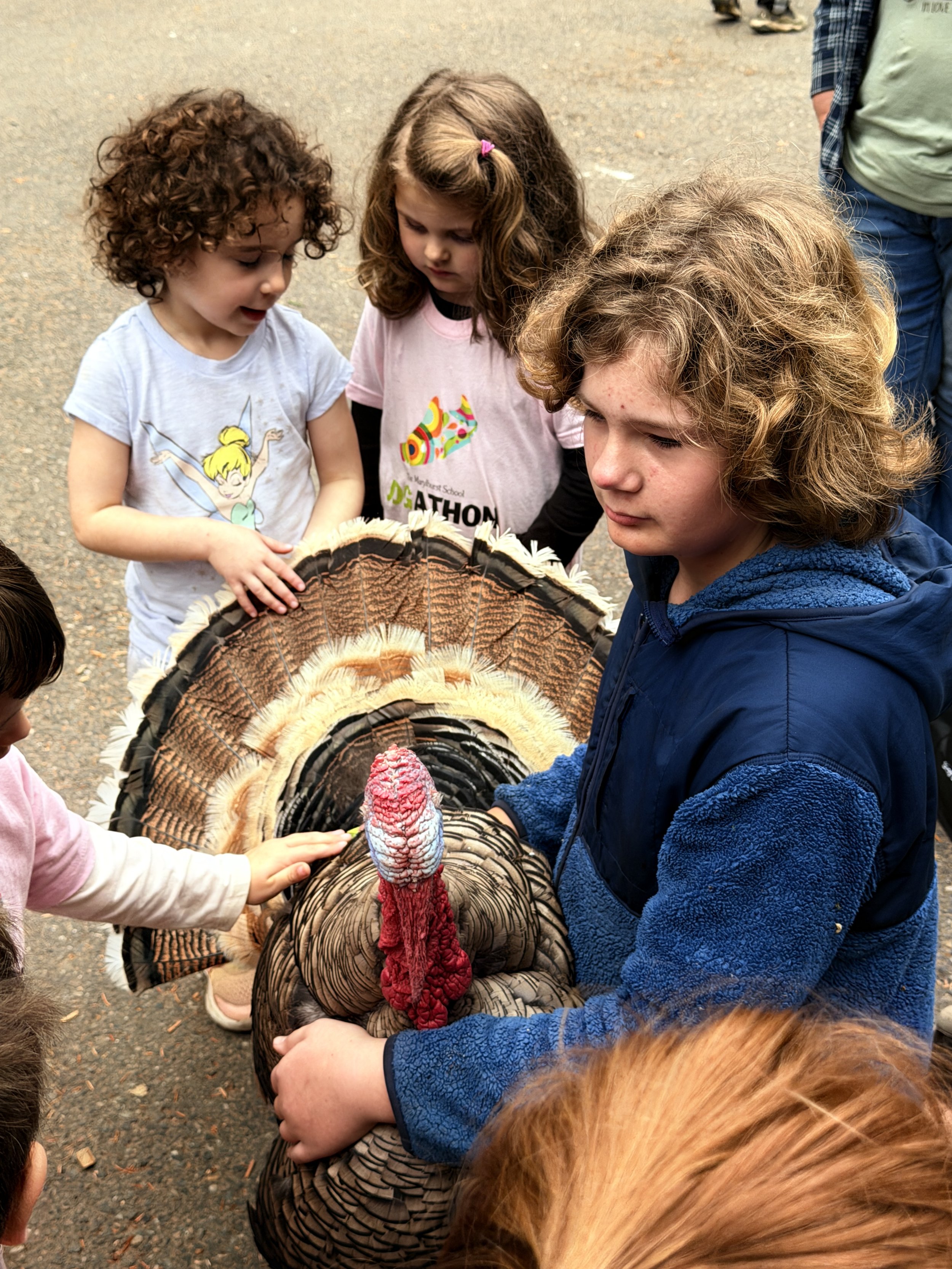
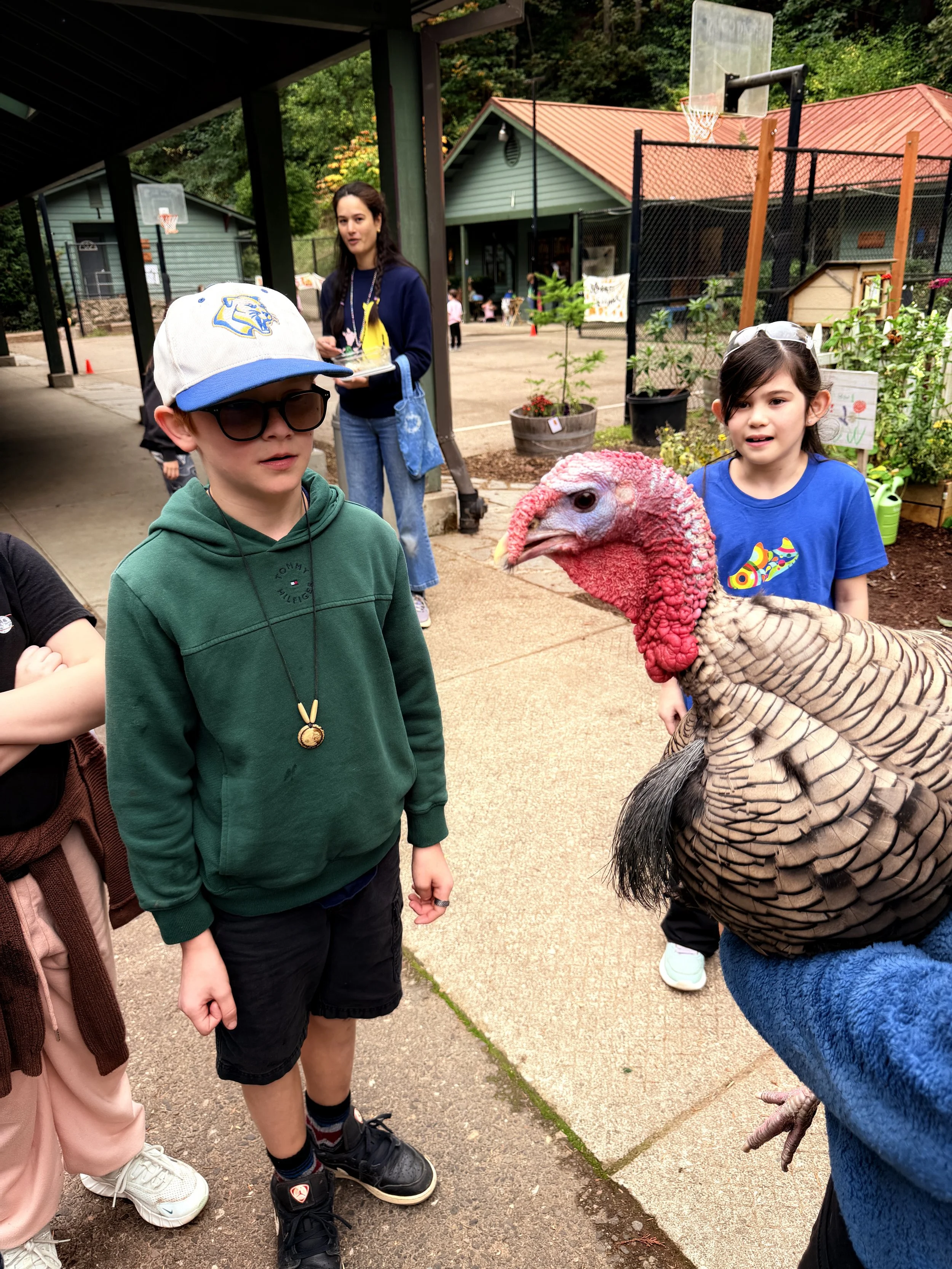
Aldin, one of our Herons, and his mom, Kathleen, brought a very special guest to Harvest Fest this year: Gobblesnood, their turkey!
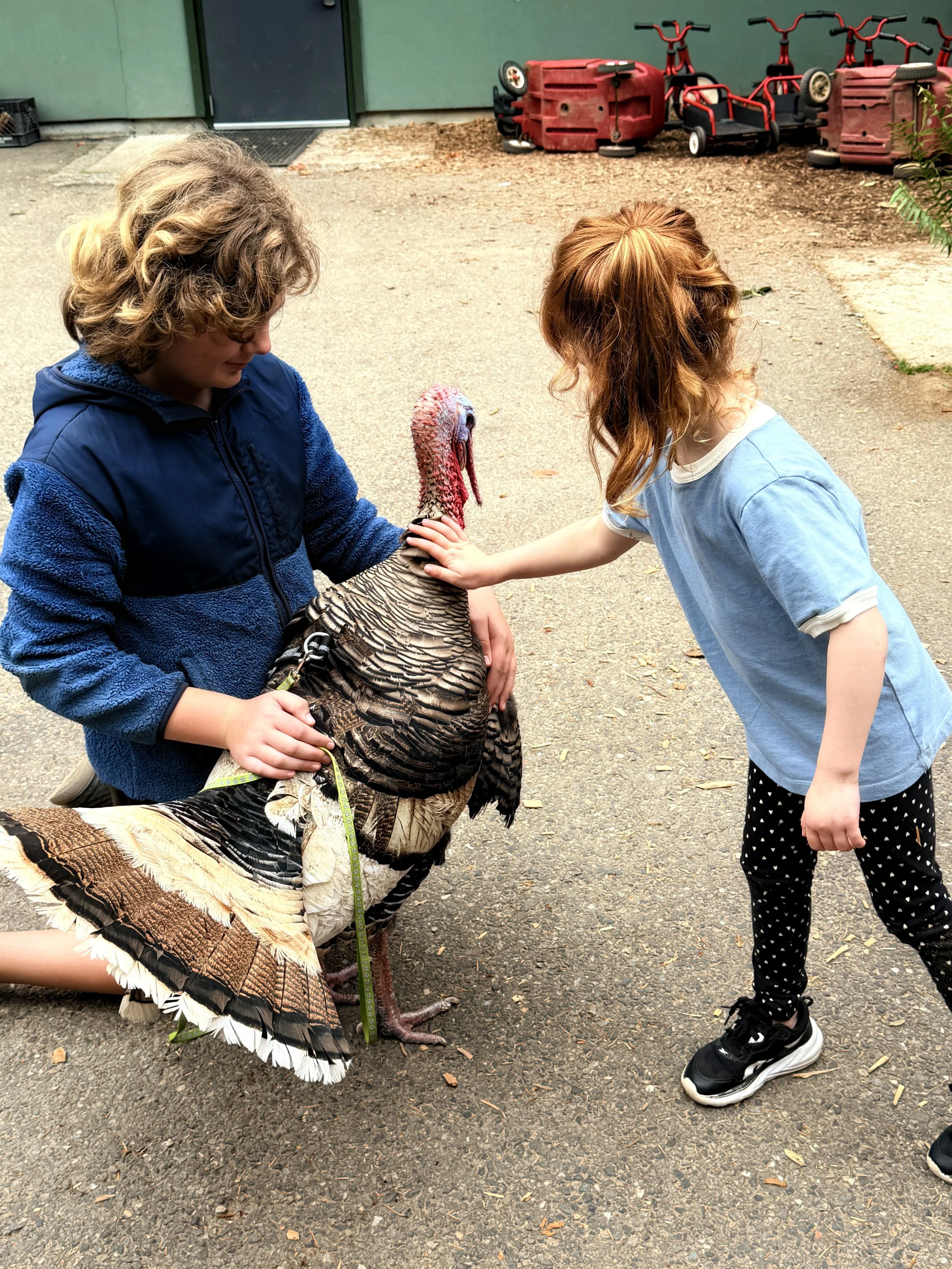
Gobblesnood was a big hit with students, who had plenty of questions about his colorful appearance, impressive feathers, and unusual behaviors. Aldin and Kathleen were happy to share what they know about their feathered friend, turning a fun encounter into an opportunity to learn more about these fascinating birds.
From his changing head colors to his impressive feather displays, Gobblesnood gave students plenty to observe, wonder about, and investigate.
Here are some of the questions students asked!
What does a turkey eat?
Turkeys are omnivores, meaning they eat both plants and animals. Gobblesnood eats poultry feed that provides a balanced diet, along with bugs, grass, and other things he finds in the yard. One of his favorite treats is apples from the family's trees!
Is Gobblesnood wild?
No, Gobblesnood is a domestic turkey. He's related to wild turkeys but is larger than his wild relatives.
What kind of turkey is he?
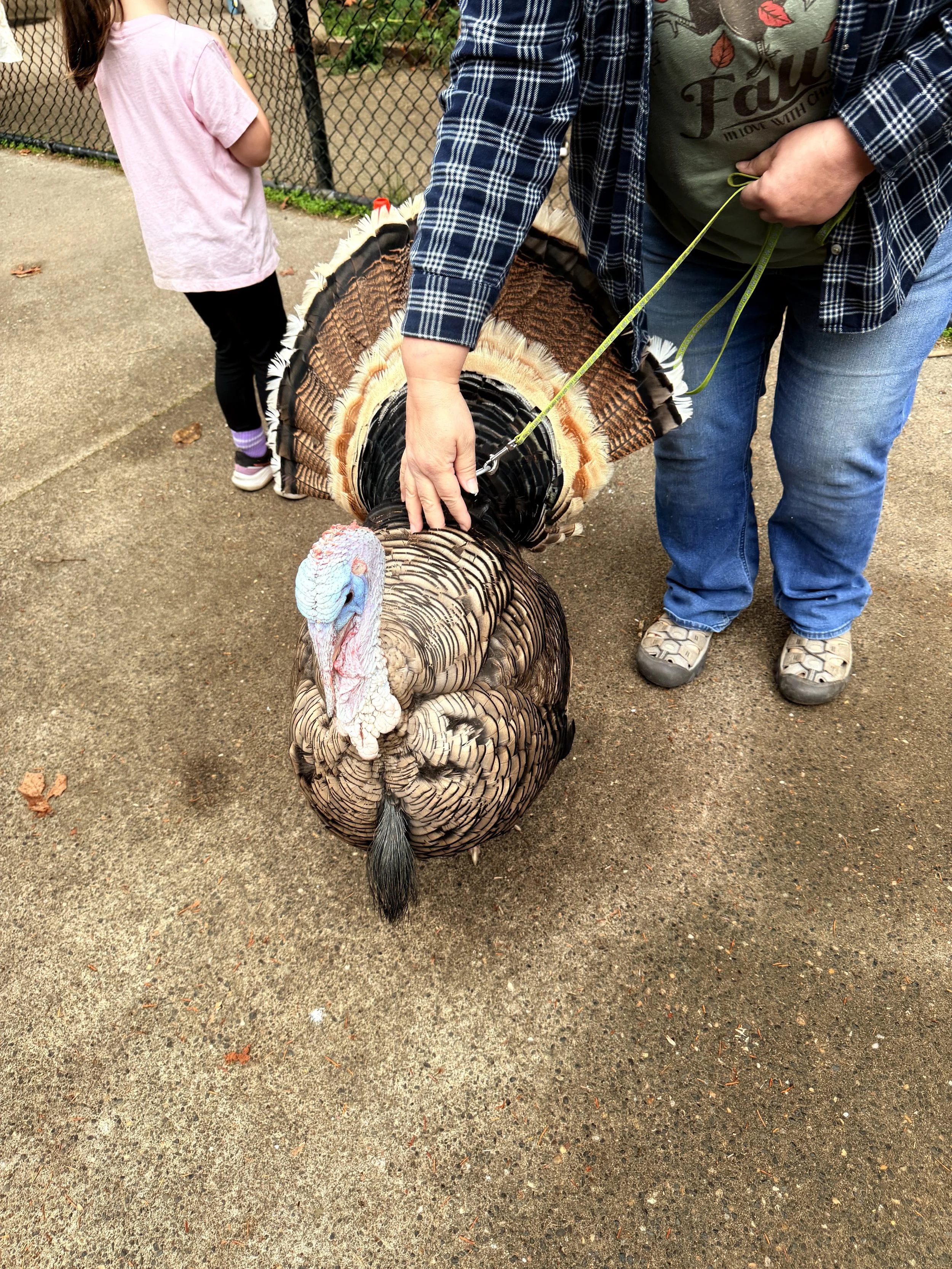
Gobblesnood is a Narragansett, a variety of heritage turkey known for its distinctive feather coloring.
How many species of turkeys are there?
Just two! The ocellated turkey is a colorful species found in a small region of Mexico and Central America. The other is the wild turkey, which is native to North America. Gobblesnood belongs to a domesticated variety of the wild turkey.
Why is he so puffy?
Both male and female turkeys puff up their feathers to show off to other turkeys. This behavior can help them impress or intimidate one another.
When he spreads his tail feathers, is he angry?
Not necessarily! He's usually just showing off. When Gobblesnood is angry or trying to establish dominance over another male turkey, he holds his feathers close to his body, stands as tall as possible, and raises his beak into the air.
His head was red, but now it's blue. Why?
Turkeys can change the color of the fleshy, bumpy skin on their heads and necks, called caruncles. These color changes are one way turkeys communicate their moods to one another.
A big thank-you to Aldin and Kathleen for bringing Gobblesnood to Harvest Fest and sharing their knowledge with our community!